Collective Tear
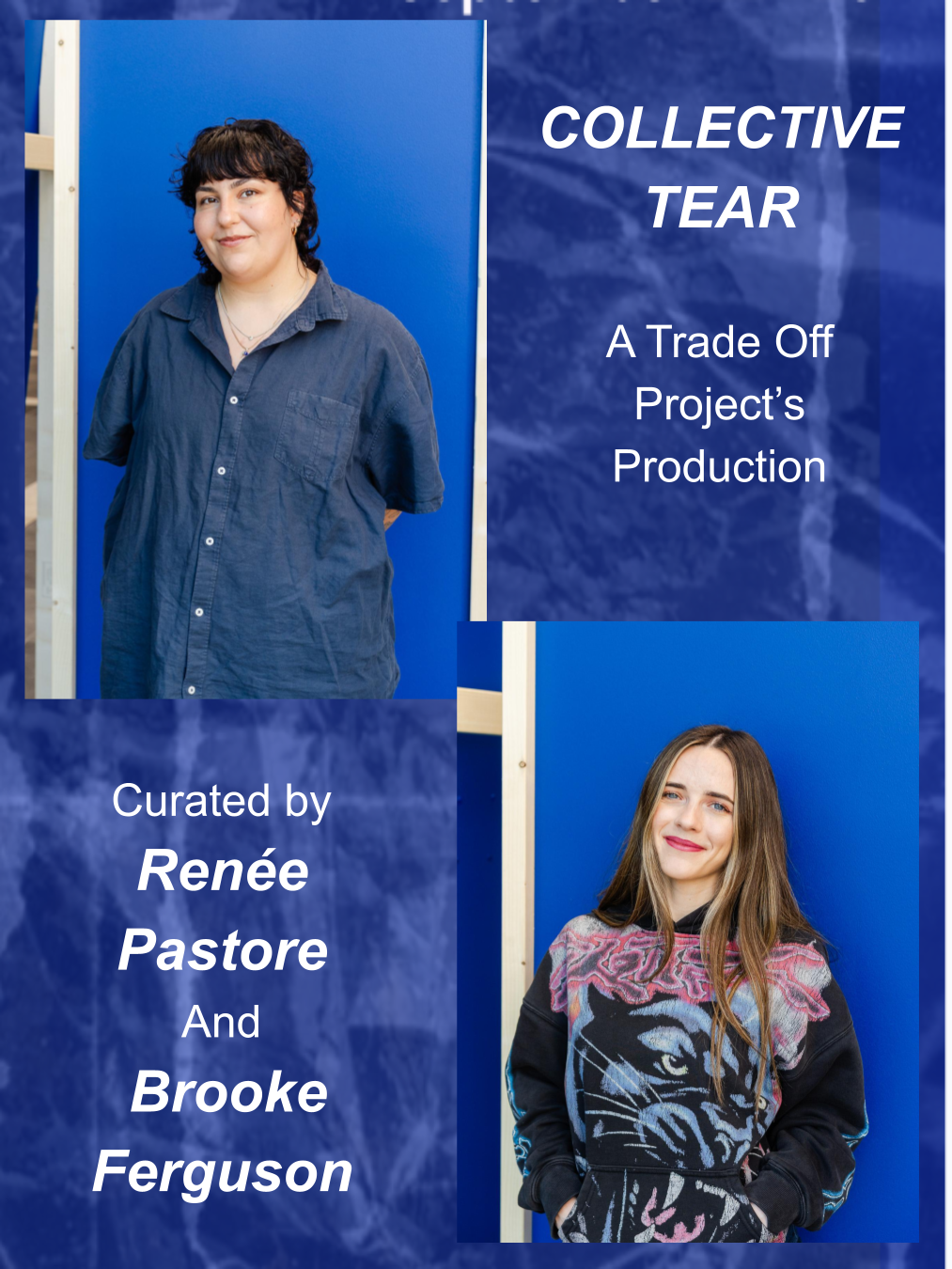
Renee Pastore and Brooke Ferguson: Co-founders Trade Off Projects
An essay by Brooke Ferguson and Renee Pastore.
Collective Tear
Our world is rapidly changing. Current and recent world events make us feel as though life as we know it will never be the same again.
The climate, how we communicate, our leaders, the jobs we have, our cultures and our relationships with one another are all changing. Our social, political and physical world have experienced significant shifts in a short period of time.
How these changes manifest as feelings that can sometimes make us feel like the world is experiencing a collective tear between what we once knew and what we anticipate for the future. Reflecting on the present, we are deep within the tear. What have we noticed within ourselves as individuals and within our communities? How are people grieving the old while simultaneously building the new? What are our dreams and how can we collectively reflect without breaking apart?
In Collective Tear, Bridget Saville, Sasha Grbich and Eleanor Amor present new and existing works made from metal, ceramic, concrete, found objects and video, which excavate this moment of shared turbulence. The connections between the global and the individual. The tensions and the hopes of the great rupture.
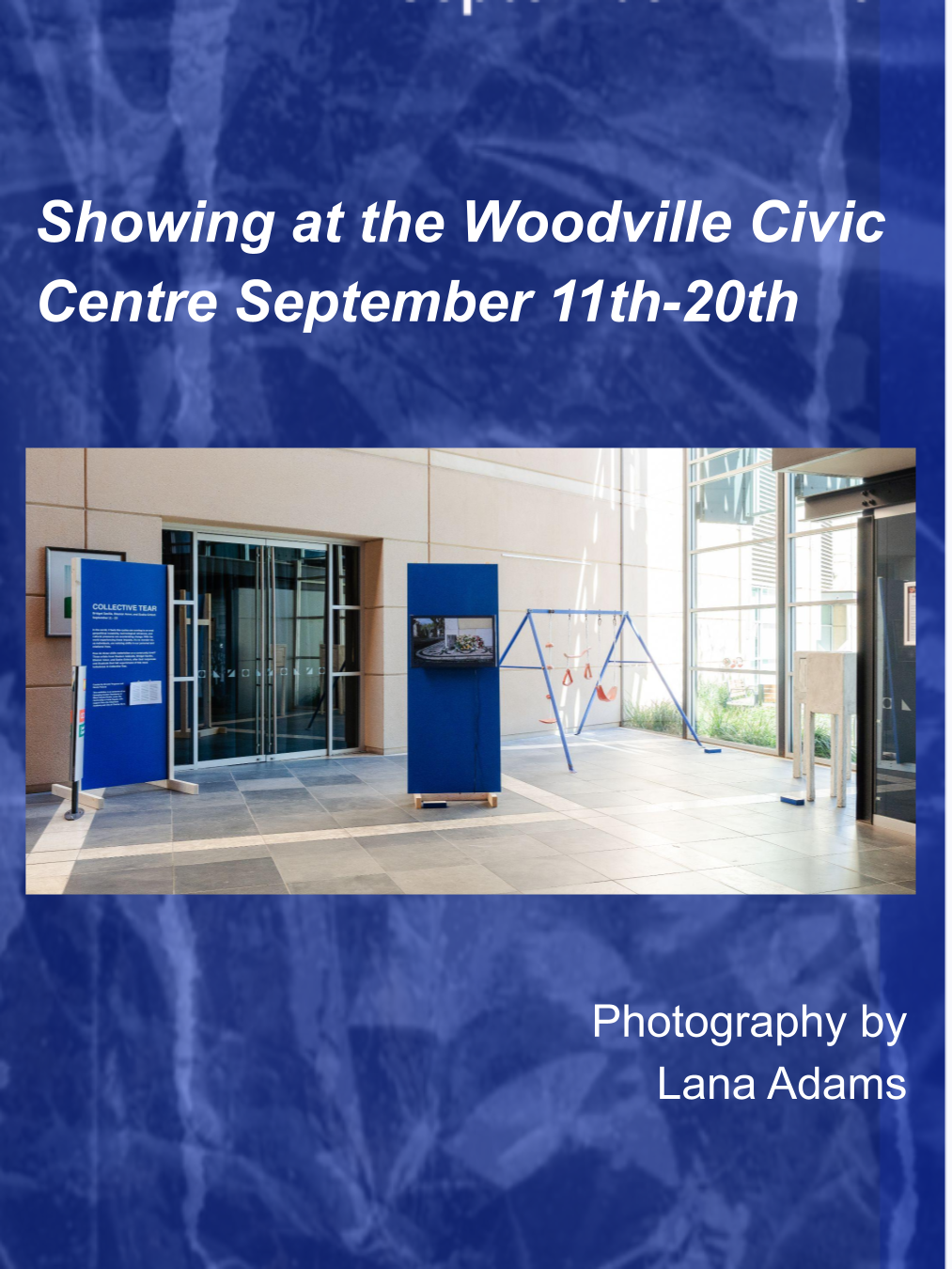
Collective Tear is exhibited at the City of Charles Sturt Civic Centre, a community hub in the heart of Western Adelaide. All three exhibiting artists live or work within the council area, a key component to the exhibition's theme and project parameters given to curators Brooke and Renee. The exhibition is grounded in place and utilises the voices and unique perspectives of artists who share different experiences of the same community.
The insights gained from this group of artists provide us with an understanding of how current global events unravel possible synchronicities. Global shifts create butterfly effects that impact us on community and individual levels and remind us that even in the most universal experiences we are deeply connected and intertwined with our smaller communities.
During the development of this exhibition Renee and Brooke took a writing retreat at Drake Street Farm, a solar punk homestay in regional Victoria hosted by friend and mutant futurist, Jose Ramos. While the retreat provided space and time to delve into the exhibition's concept it also became an integral reflection point. It solidified the curation of the artists in the exhibition through realising the importance of investigating how communities are responding to world-wide changes and adapting their lives to it.
An excerpt from Renee’s journal reflects on this, “the cottage we are in is solar powered, the soil is improved by the chickens... chicken power. The food is grown by people and earth power. The infrastructure is built by people power. There is so much love and trust and hope on Drake St Farm in its own little culture and hospitality and people. They have welcomed us in and let us stay and fed us and involved us and given us time and space. That’s it, that’s what some people are doing within these collective tears, being open to change, making effort to think critically and act accordingly. Jose and Dee said that they enjoy having visitors because their house is too big for just the three of them. They want to share what they have and they want it to be intentional too. I feel grateful to be here and to have this space and time to think and write.” Brooke and Renee spent the week sitting in the solar powered studio, mainly talking and writing. Finding the sunny spots and bathing in them like a cat. The work was done with patience. Rather than rush to build the new, the curators sat in the cracks, in the cold, in the quiet mornings and chatty afternoons. Ideas brewed slowly, but it was better to be slow and together than fast and alone.
Considering Bridget, Eleanor and Sasha’s work as a collection, the assembly conveys care, depth and togetherness.

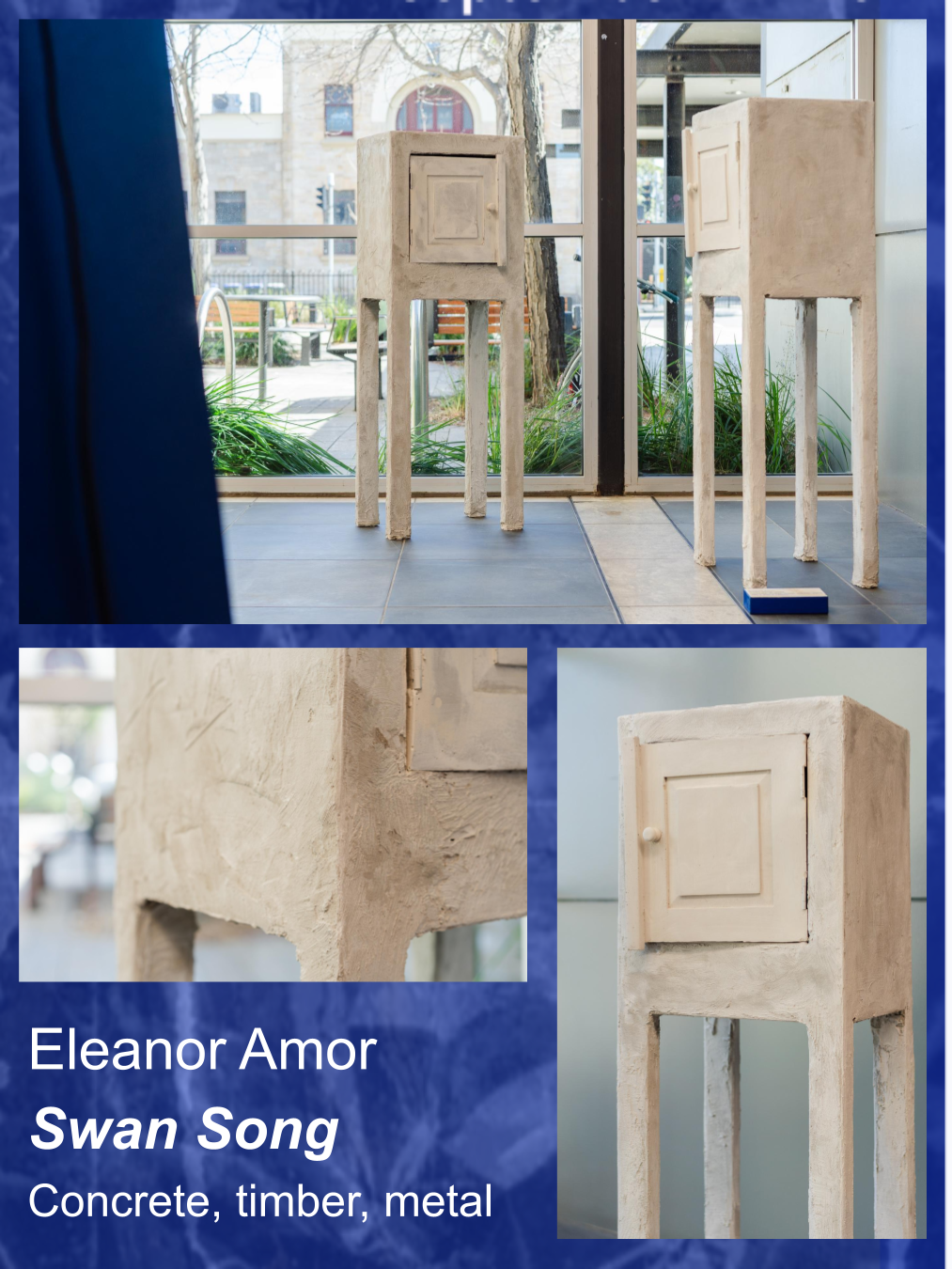
Bridget’s swing set, playful from a distance, yet it really cannot be touched. Sasha’s documentations of the cemetery, at first encounter perhaps grim, but take the time to sit with it and you will soon realise it is a space of belonging and care. A slightly opened set of doors in Eleanor’s cabinets invites you to step closer, but behind it is a hollow concrete square.
Collective Tear as a concept and exhibition, asks artists and viewers to consider their personal responses to the current state of their world. What patterns do they observe? How does their interaction with others change? What is undergoing change in their surroundings? Do their thoughts and desires change? Maybe it's a gravitation towards specific mediums and materials?A fabrication approach? A particular feeling?
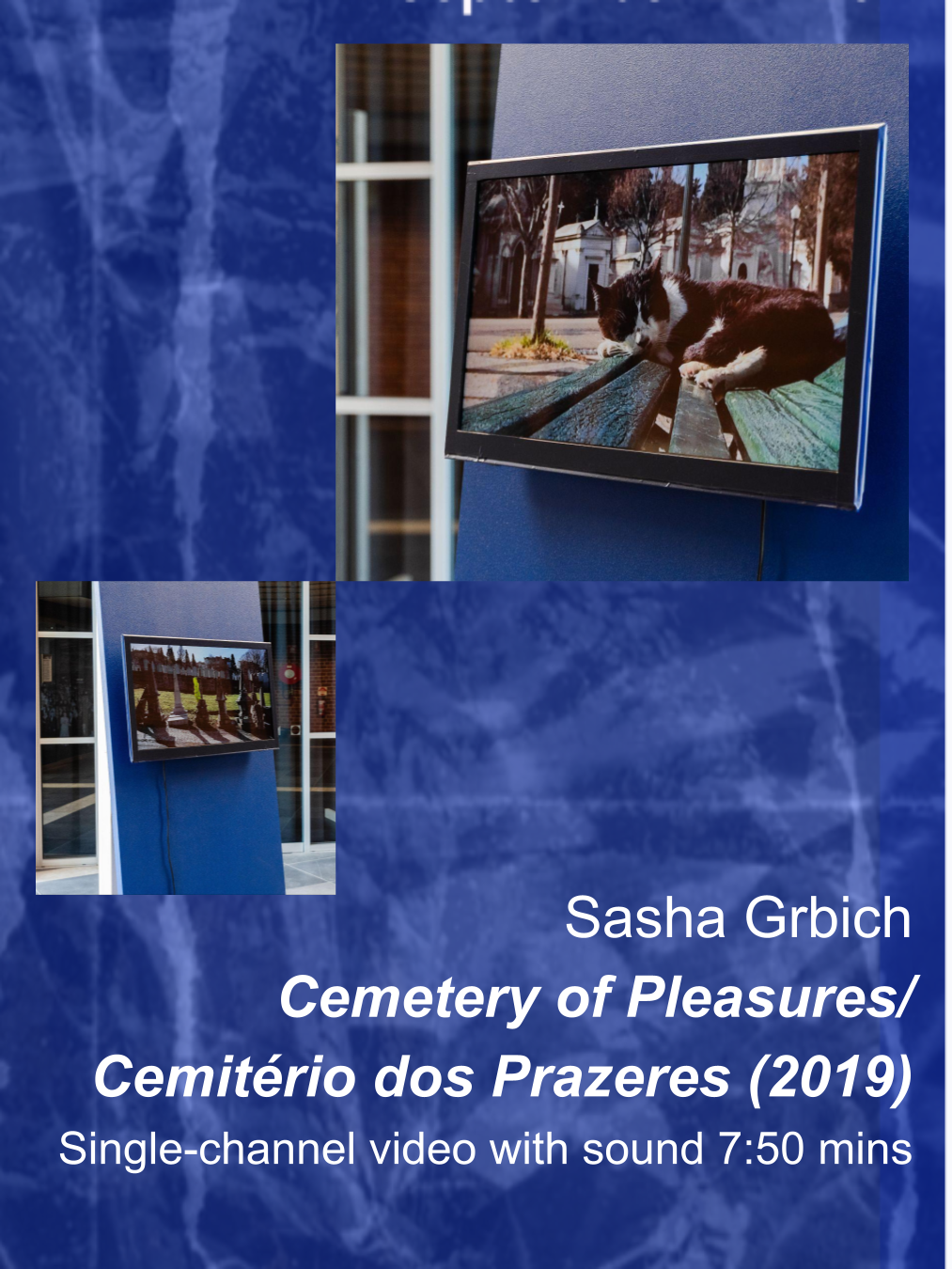
We observe a sense of weight, emotionally and materially at play in the works by the artists in. Sasha’s video work Cemetery of Pleasures quietly observes and focuses on the everyday routines of the people who live in Lisbon and visit the cemetery to honour passed loved ones. There’s a focus on the stillness of the old buildings, streets, and people. The quietness of a space like the cobbled cemetery. The headstones and mausoleums are decorated, cleaned, and sturdy. A red-light district once existed in the same area as this cemetery. The town grows and changes around it.
This groundedness continues in Eleanor’s concrete cupboards, adorned with doors left slightly ajar. Her choice of materials feels connected to both the urban and natural world. Simultaneously, the sculptures evoke a tension in their stature and in their curiosity. What is kept inside? Can we peek? There’s an echo to the sturdy and adaptable concrete jungle and the curiosity of the cemetery's mausoleums and graves in Sasha’s work.
Bridget’s work utilises a found swingset with the swing seats replaced by her made ceramic objects. A playful and nostalgic item representing free movement and light-ness now acquires a heavy and fragile tone. Something about this common backyard item becomes slightly different, slightly ‘off’. Childhood memories, a world we once knew to be light and playful, become layered as we grow. The swingset, a object of nostalgia, exists in this work as a stand-in, a reflection on how things subtly change. It reminds Brooke of her time on the trampoline at Drake Street Farm, “together three of us jumped, fell, laughed and cried, by the end we were not strangers anymore. Something about the disarray brings us closer.”
What we want people to sense and feel is that significant global events do impact everyone and everything and they show up in our lives and practices in unexpected ways.
Poem by Renee Pastore & Brooke Ferguson:
The elevator waiting area. The early morning. The times when dreams are fulfilled, or dreams sink, and there is this transition and waiting for what’s next. Something occurs, a rupture, crumbling around the edges long enough that the shape has changed into something not yet recognisable. Soon, seedlings will emerge from these cracks. Not quite awake, not quite asleep. Not quite new, not quite old.
Discarded but not yet recycled. Dead, decomposition to begin shortly.

Collective Tear features the work of established and mid-career contemporary artists Bridget Saville, Eleanor Amor, and Sasha Grbich. It is curated by Renee Pastore and Brooke Ferguson, who work together as ‘Trade Off Projects’. This exhibition is the outcome of their Emerging Curator Residency and Mentorship, supported by Helpmann Academy, Mixed Goods, City of Charles Sturt and Anna Zagala. We sincerely thank everyone who has supported us and all those able to visit the exhibition.